How to Organise Your Tackle on a Small Boat When Every Bit of Space Counts
A tackle box that works on a wharf becomes a problem in a dinghy or tinny. This guide shows you how to find the free space in your boat, choose a small working set of lures and keep hooks covered. It also covers where rods and gear sit, so the floor stays clear and you spend the trip fishing.
A tackle box that works fine in a shed or on a wharf becomes a problem in a small boat. A dinghy, tinny or small trailer boat has little deck, a few seats and sides you lean on. Every item you bring competes with your feet, your rods and the person next to you. Good small boat tackle organisation comes down to where each thing sits and how many times you have to handle it.
This guide gives you a layout you can set up in one pass and repeat every trip.
Why a Small Boat Makes Tackle Problems Worse
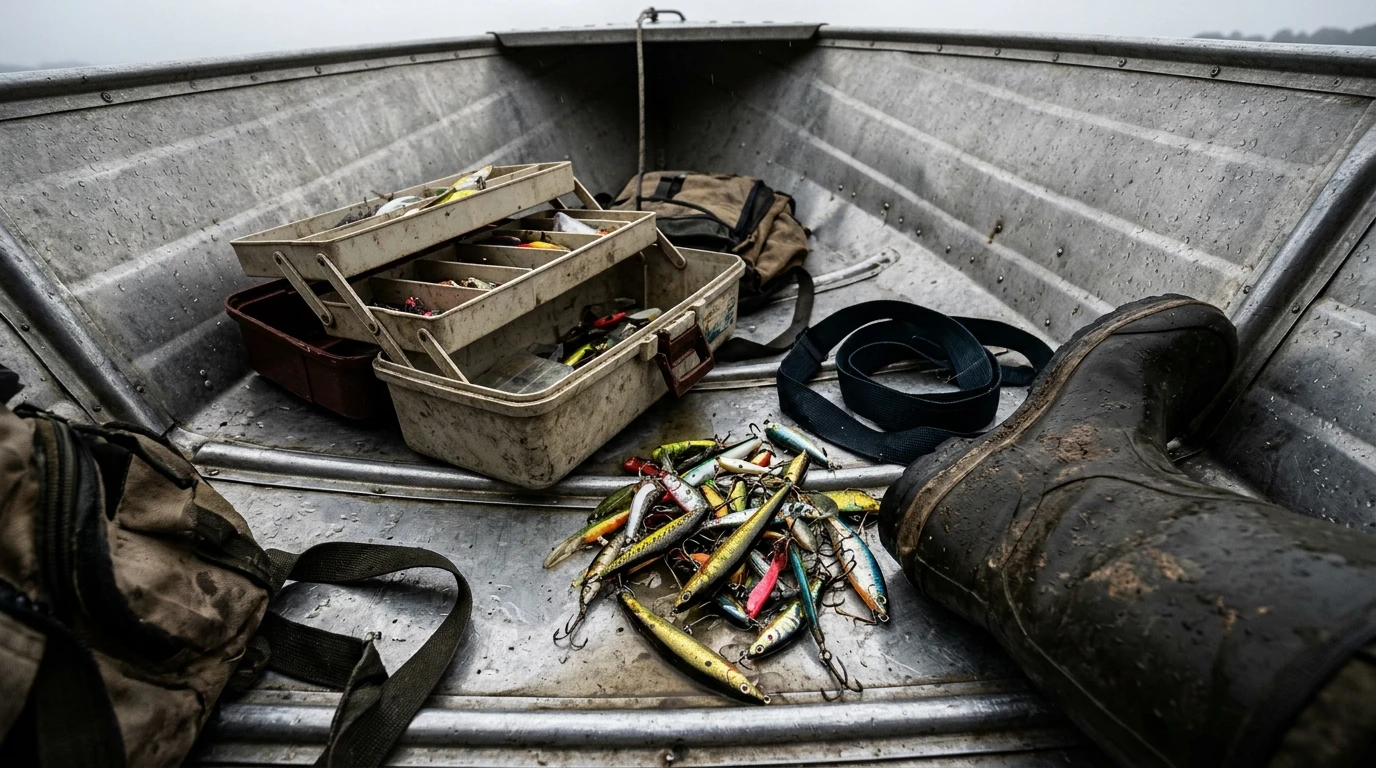
In a small hull, loose tackle ends up underfoot. A lure with exposed hooks on a seat will catch a sleeve, a lifejacket or a hand. A tackle box left open on the floor slides when the boat rocks and the lures inside tip into each other and tangle.
Digging through a box also takes both hands and your attention. You crouch, the boat shifts and you are no longer watching your line or the water. Changing lures should be a quick job done from where you are standing or sitting.
Three things go wrong most often on small boats:
- Hooks snag on clothing, bags and other lures
- Gear slides into the bilge or bottom of the boat and gets wet or lost
- Someone steps on a lure or tackle tray
All three come from loose gear and too many trips to the tackle box, which is what a good layout removes.
Walk Your Boat First: Where Space Is Actually Free
Before you buy or pack anything, stand in your empty boat and look at it as a fishing platform. Sit in each seat. Reach out to each side. Note where your hands naturally fall when you are fishing.
Look for three kinds of space:

- Floor space you must keep clear. This is where you walk, kneel and land fish. Treat it as off limits for gear.
- Dead space. Under seats, in the bow, along the inside of the hull, behind the transom. These spots are out of the way but harder to reach.
- Reach space. The area within an arm’s length of where you sit or stand while fishing. Things you use all the time belong here.
Most cluttered boats have it backwards: the gear used most is in the dead space, and the gear used least is in the reach space. Swap them. Spare line, pliers you rarely need and the main tackle box go in the dead space. The few lures you are actually fishing go in reach.
Do this with the boat on the trailer or at home, where you can take your time. Doing it afloat means working it out while the boat moves.
Sort Your Lures by the Trip, Not by The Tackle Shop Shelf
Tackle shops sort lures by type: jigs here, soft plastics there, hard-bodies somewhere else. That works for browsing. On a boat, a better question is what you will fish today.
Think about the trip before you leave:
- Target species. If you are chasing one kind of fish, you do not need lures for another.
- Water and depth. Shallow harbour fishing and deeper offshore work call for different lures.
- Conditions. Clear water, murky water and bright or dull days all affect what you reach for first.
From your full collection, pick a small working set. A handful of lures you trust for the conditions will do more than a box of fifty that you scroll through. Everything else stays in the main tackle box, closed, in the dead space. If the fish are not responding, you can open the box once, swap the working set and close it again.
Keeping the working set small is what makes the rest of this system possible. A small set fits in reach storage. A large one does not.
Keep Hooks Covered and Lures Off the Floor
Most boat tackle injuries and snags come from lures with exposed hooks lying loose. Two habits fix most of it.
Cover hooks whenever a lure is not in the water. A lure that is stored should have its hooks held, covered or clipped so they cannot reach skin, clothing or other lures. This matters more in a small boat because someone is always within arm’s reach of you.
Keep lures off the floor entirely. The floor is wet, it is where feet go, and gear on it slides with every wave or wake. Lures on the floor get stepped on, kicked into the bilge or tangled around a bag strap. Every lure should have a place that is above the floor and held in position.
If you are fighting a fish or moving about, nothing should be loose. A good test: if you shook the boat, would anything move? If the answer is yes that item needs a better spot. For more on stopping hooks from catching each other, see this guide on how to prevent fishing lure tangles.
Where Clip-On Lure Storage Fits in a Small Boat
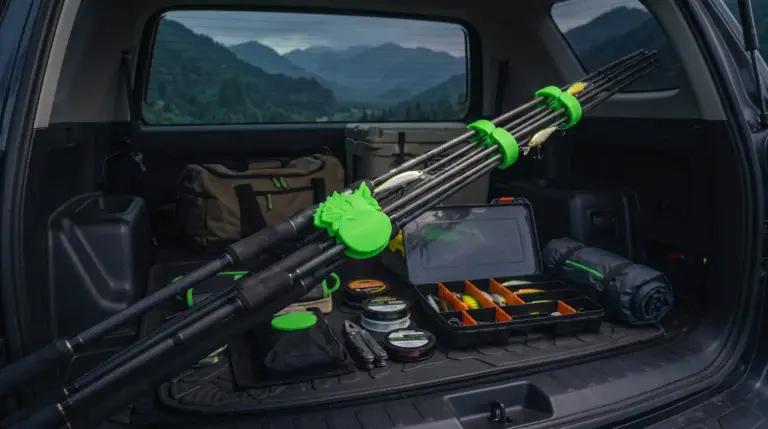
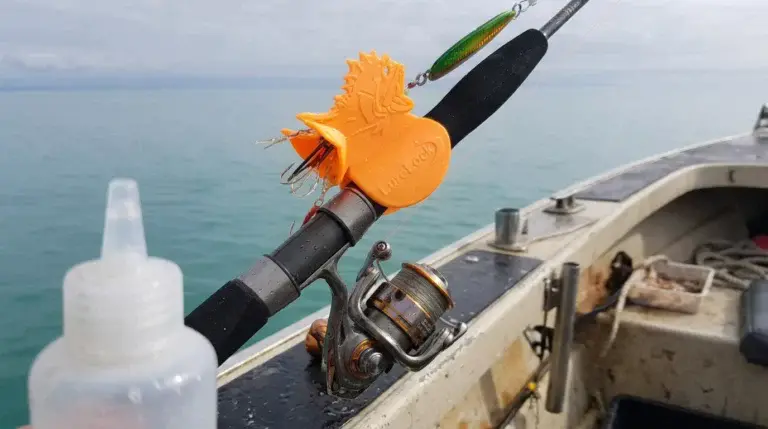
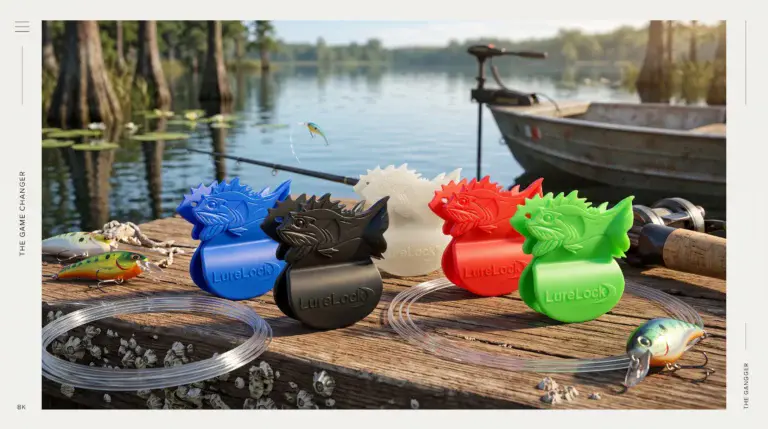
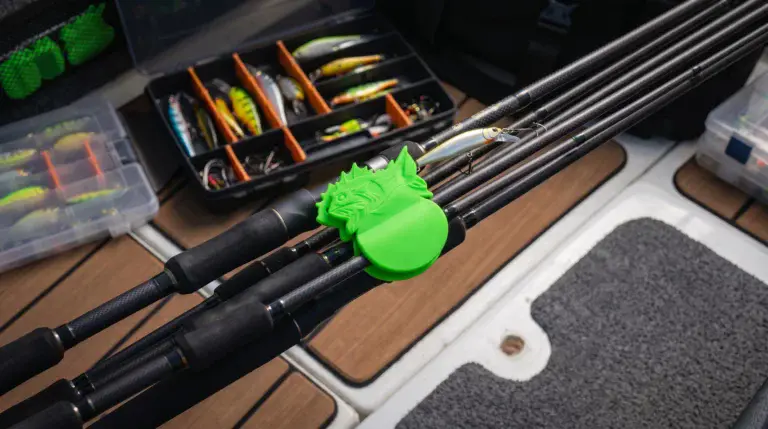
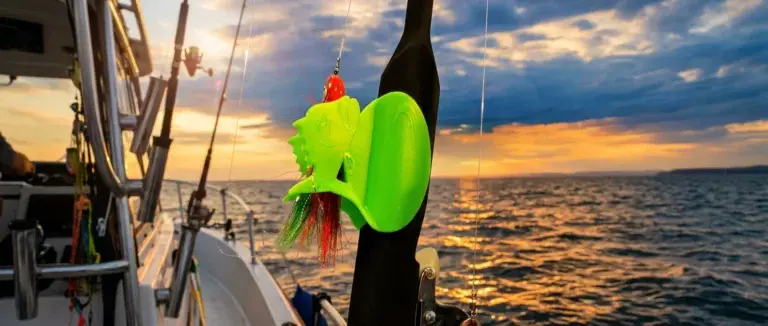
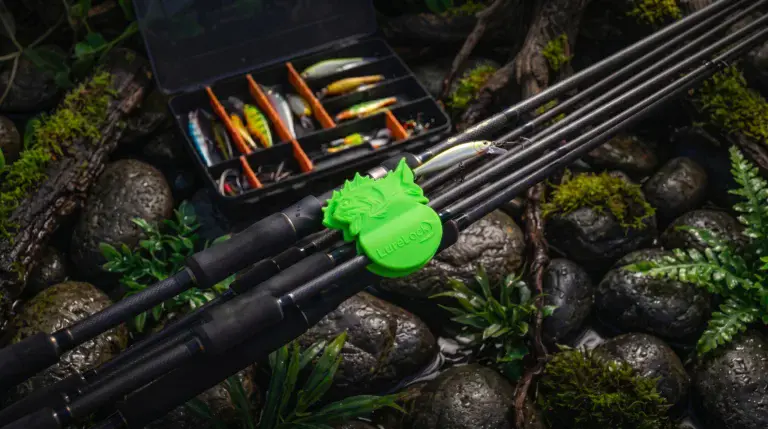
Clip-on lure storage solves the reach space problem. LureLock is clip-on lure storage for fishing rods. Instead of carrying your working lures in a tray or box, they are held on the rod itself, so they are always within reach of your hands and never on the deck.
For a small boat, that has some practical effects:
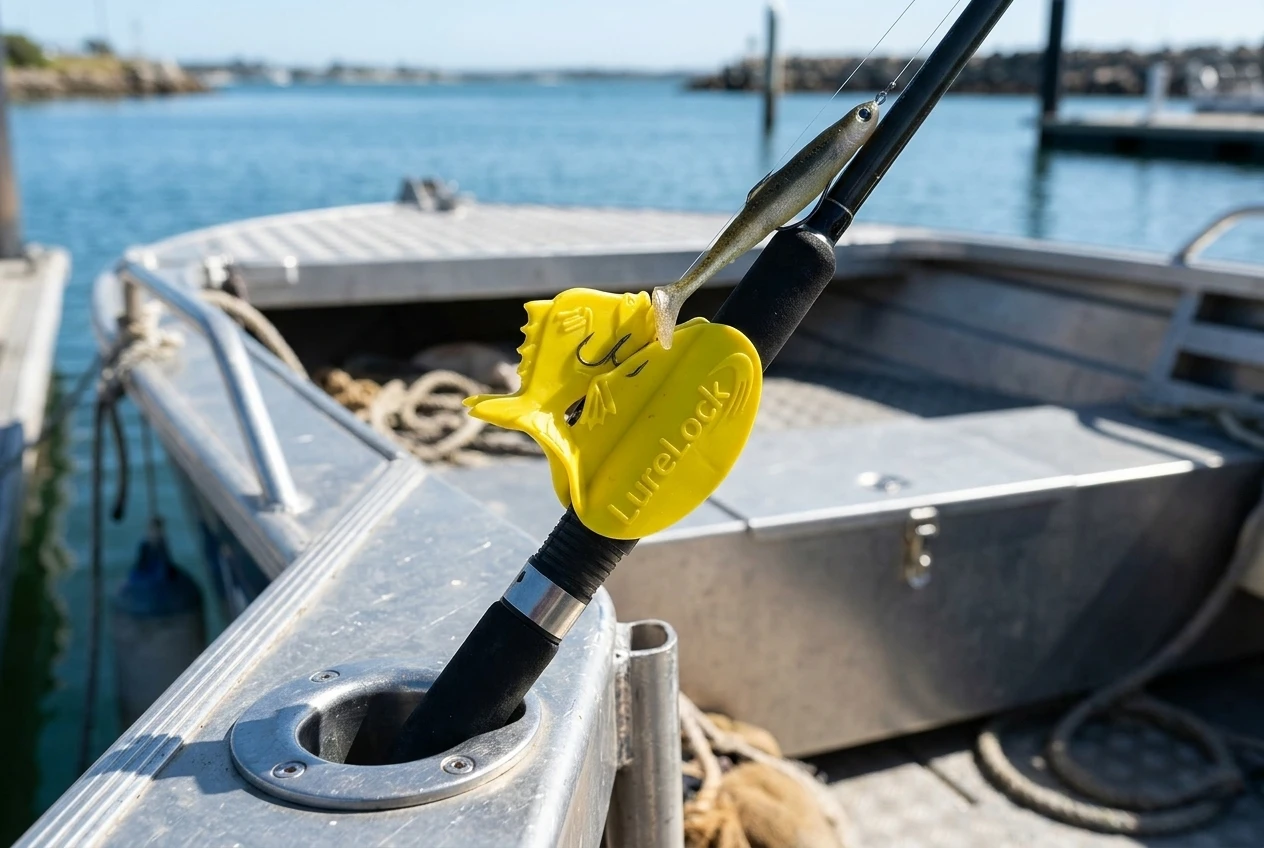
- Lures stay with the rod. There is no tray to balance on a seat and no box to open at your feet.
- Lures are held in place. Stored lures are not sliding around the deck or tumbling into each other.
- Changing lures is quick. You take the lure you want from where it is stored and carry on fishing.
- The main tackle box stays shut. It becomes a stock room you visit once or twice a trip rather than something you work out of.
Matching the storage to the trip also helps. If your working set is a handful of lures, it fits the idea of clip-on storage well. You are not trying to carry your whole collection on the rod, only what you plan to fish.
If you have two or three rods in the boat, think about which lures belong with which rod. A rod rigged for one style of fishing can carry its own backups, so you are not hunting for the right lure for the right rod.
You can read more about the product on the LureLock site or see how it looks in use on boats in the Nifty Boat videos.
Rod Holders, Sides and Seats: A Simple Layout That Works
With your reach space, working set and clip-on storage sorted, the boat layout is simple. Aim for a layout where everything has one place and the floor stays clear.
Rods. Use rod holders for rods that are not in your hands. Rods in holders stay off the deck and out of the way. Keep rod tips pointing away from where people sit and move, so nobody takes a tip in the face when the boat rolls. If your boat has few rod holders, a rod lying across the seats is better than a rod on the floor, but fit a holder if you can.
Seats. Keep seats for sitting. A seat piled with gear is a seat you cannot use, and gear on a seat falls off the first time the boat tilts. Use the space under seats for the main tackle box, a bag of spare gear and anything else you will not touch while fishing.
Sides. The inside of the hull and the gunwales are useful for items you grab often: a pair of pliers, a cloth, a net handle. Anything that sits on a side should be held, clipped or tied, so it cannot roll off into the water.
Floor. Keep it clear. A clear floor lets you move, kneel and land a fish without kicking gear around. It is also the safest place for a bare foot.
A reasonable arrangement for one or two anglers:
- Main tackle box shut, under a seat or in the bow.
- Working lures stored on the rods, within reach.
- Pliers, cutters and a cloth in one spot on the side or in a small pouch.
- Rods in holders or secured along the seats when not in use.
- Floor clear.
Adjust to suit your boat but keep the principle: reach space for what you use, dead space for what you do not, and an empty floor.
A Two-Minute Pack-Down Routine for The Ramp
Packing down is where a lot of tackle gets lost, bent or tangled. A short routine done the same way each time keeps the work quick and stops gear being thrown in a pile.
- Lures first. Check that each lure you used is back in its storage position with the hooks held. Do this before you move rods around.
- Rods next. Take rods out of holders and lay them where they will travel, with tips protected and nothing tangled around them.
- Loose items. Collect pliers, cloths and any bags from the sides and seats. Put them in one container.
- Main tackle box. Check the latches are closed and place it where it will not slide on the drive home.
- Last look. Run your eyes over the floor and seats. Anything left there is something you will lose or step on.
If you are packing down after a wet trip, give lures a chance to dry before they are shut away for a long period. For broader advice on keeping gear in good condition, see how to protect your fishing gear.
A Quick Pre-Trip Checklist for Small Boat Tackle
Run through this at home or at the ramp, before you push off:
- Working set of lures chosen for the target species and conditions
- Working lures stored on the rods, with hooks held
- Main tackle box packed, latched and placed in dead space
- Pliers, cutters and a cloth in one reachable spot
- Rods in holders or secured so they cannot roll
- Seats clear, floor clear
- Spare line and extra tackle stowed, not loose
- Nothing in the boat that would slide if the boat tilted
If every item on that list is done, you can spend the trip fishing instead of managing your gear.
See How It Works on a Small Boat
If you want to see clip-on lure storage in use on a boat, the Nifty Boat videos show real footage. When you are ready to try LureLock yourself, you can find your nearest New Zealand stockist and pick one up before your next trip.